MPhil Research · Southern Urbanism · Inclusive Planning
Your Mess, My Life
The Junction between Land Use Planning and Street Vending in the Accra Mall Enclave
Joe Quarcoo’s University of Cape Town MPhil research examined the tensions between formal land-use planning and the everyday realities of street vending in Accra. Centred on the Accra Mall Enclave, the study explored how vendors, planners, public officials and other urban actors negotiate space, regulation, livelihoods and belonging.
The research contributes to wider conversations about urban informality, Southern urbanism and what more inclusive approaches to planning could mean in practice.
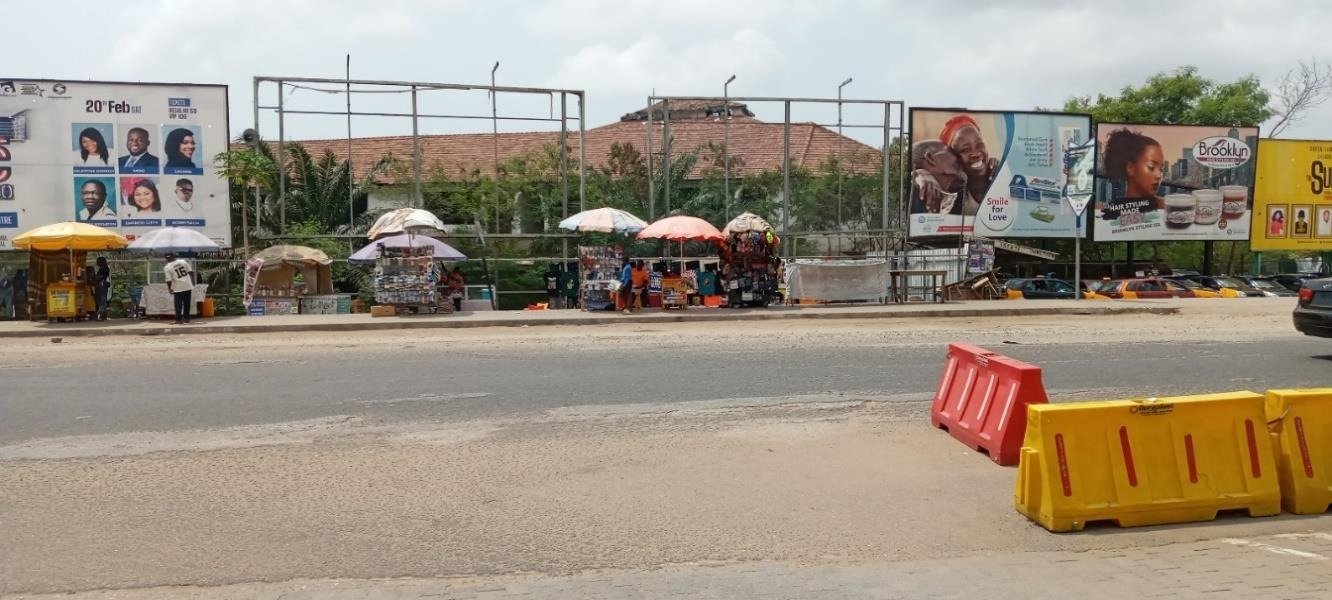
Research at a Glance
A focused qualitative study of planning, vending and urban informality.
- Research type
- MPhil thesis
- Field
- Southern Urbanism and Urban Studies
- Study area
- Accra Mall Enclave, Ghana
- Approach
- Qualitative, multi-stakeholder research
- Completed
- University of Cape Town, 2022
The Inquiry
When formal planning meets the lived city.
Street vending is woven into the social and economic life of Accra, yet it frequently occupies an uncertain position within formal planning and regulation. Vendors provide goods, services, employment and convenience, while also operating in spaces shaped by competing demands concerning movement, safety, order, infrastructure, commerce and public access.
Your Mess, My Life investigated this junction rather than reducing it to a simple conflict between ‘legal’ and ‘illegal’ activity. The research examined the different rationalities operating within the same urban space: those of vendors building livelihoods, planners working within constrained institutions, political actors, municipal authorities, private-property interests, pedestrians and customers.
The study asked what these relationships reveal about how the city is actually made—and what must change if planning is to respond more seriously to urban informality and everyday life.
Study Context
A concentrated view of wider urban tensions.
The Accra Mall Enclave brought multiple urban systems into direct contact. A major commercial destination, transport routes, municipal jurisdictions, pedestrian movement and established street-vending activity met within one intensely used area.
This made the enclave a valuable case through which to examine wider questions about land use, livelihoods, regulation and access to urban space. The study did not treat the enclave as representative of every form of informality in Accra. Instead, it used a carefully bounded case to understand relationships and institutional tensions that may also be relevant to other parts of the city and other rapidly changing African urban contexts.
Case-study findings should be understood in their specific geographic, institutional and political context.
Research Questions
Understanding the different logics shaping one urban space.
The questions were designed to move beyond assumptions and examine how different actors understood the same space, its problems and its possibilities.
- 01
How are planners navigating the tensions between planning regulations and the reality of street trading in the Accra Mall Enclave?
- 02
What conflicting rationalities emerge between policy, planning practice and the practices of vendors?
- 03
What are the logics, strategies and experiences of street traders within the study area?
- 04
How are street vendors negotiating their interactions with state actors, including planning officers, police, city guards and toll collectors?
Methodology
Listening across the system.
The study used a qualitative and sequential research design. It brought together policy analysis, sustained field engagement and interviews across multiple stakeholder groups so that formal policy positions could be considered alongside lived experience and professional practice.
Policy and regulatory review
National legislation, planning guidance, urban and youth policy, local-government by-laws, strategic policy documents and media reporting were reviewed to understand the state’s formal position on street vending and informality.
Embedded field engagement
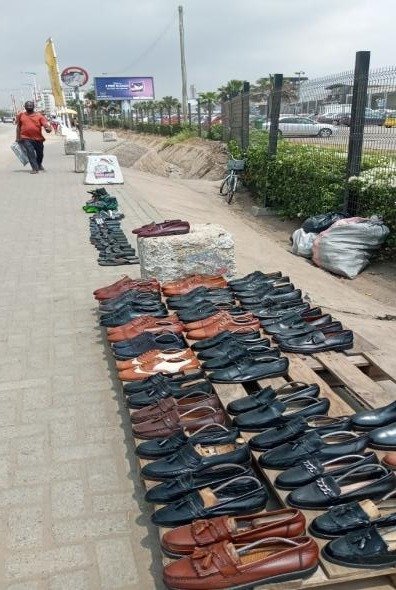
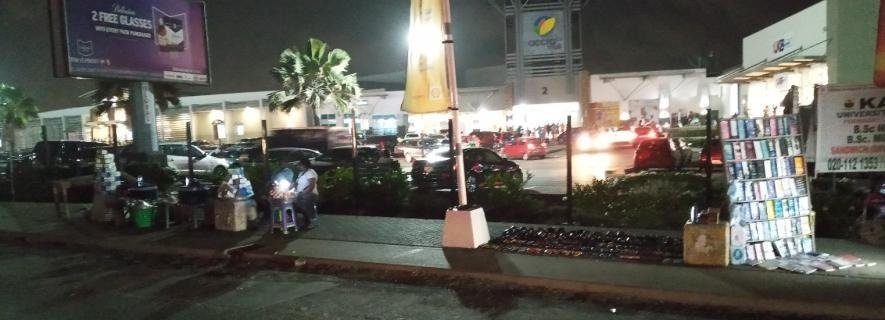
Joe undertook field observation and embedded ethnographic engagement across different sections of the Accra Mall Enclave. This included observing changes between daytime and night-time trading, spatial patterns, vending clusters, pedestrian movement and relationships among actors.
Multi-stakeholder interviews
Semi-structured interviews explored the perspectives of vendors, planners, state officials, planning lecturers and other people connected with the enclave. The research involved 53 participants, including 27 vendors and 19 state officials, alongside lecturers and other stakeholders.
Ethics & representation
Participant confidentiality is preserved throughout this public summary. The photographs provide contextual views of the study area and should not be read as identifying the individuals who participated in the research.
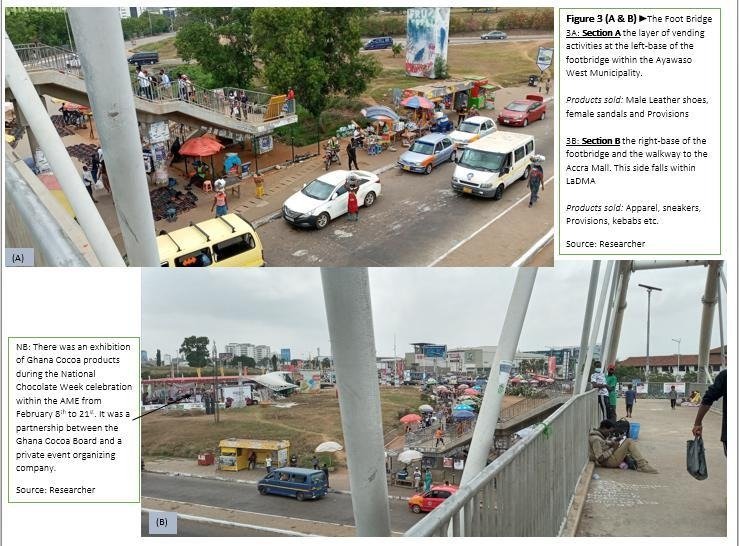
Key Findings
Informality is not outside the city-making process.
The research revealed neither a unified state position nor a single vendor experience. Instead, it found overlapping relationships, institutional constraints and competing understandings of order, legitimacy and urban life.
The state also helps produce informality
Informality was not simply the result of vendors operating outside formal rules. Planning omissions, limited livelihood alternatives, inconsistent enforcement, fragmented governance and the absence of adequate spatial provision all contributed to maintaining the conditions described as informal.
Vendors were seeking recognition and stability
Vendors did not uniformly reject organisation or regulation. Many sought recognition, guidance and a more secure basis for trading. Their understanding of formalisation—including willingness to pay authorised tolls—did not always match the state’s emphasis on relocation or removal.
Planners experienced institutional tensions
Planners and public officials did not speak with one voice. Some recognised the need for more inclusive approaches, while professional expectations, bureaucracy, political intervention, limited resources and inherited planning practices constrained what they felt able to do.
Eviction did not resolve the underlying conditions
Periodic removals disrupted livelihoods but did not address why vending occurred in the enclave. In the absence of viable and economically workable alternatives, vendors frequently adapted, negotiated and returned.
Relationships helped the space function
Vendor associations, municipal officers, politicians, customers, city guards and other actors were connected through formal and informal relationships. These relationships could provide temporary stability while also reinforcing insecurity, ambiguity and unequal power.
The meaning of urban order was contested
Different actors agreed that the space required management, but they did not necessarily agree on what organisation should look like. The research exposed competing ideas about public space, legitimate work, visibility, mobility, aesthetics and who has the authority to shape the city.
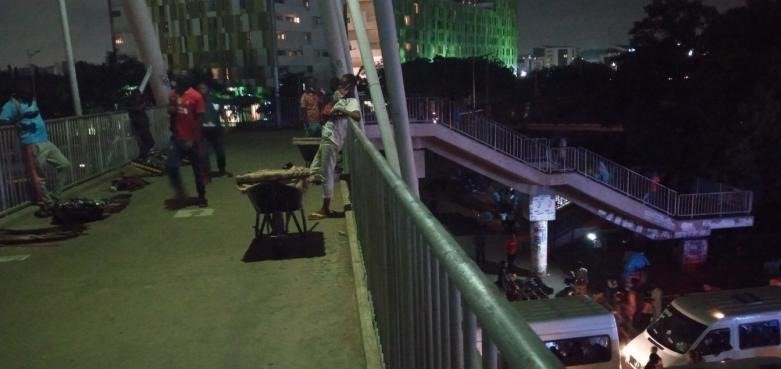
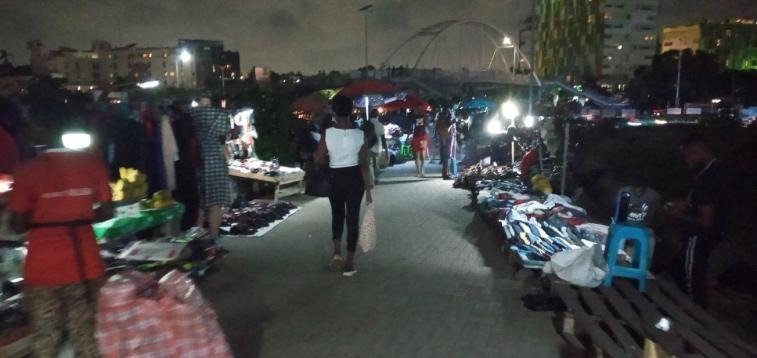
Ideas used in the research
Concepts for reading the lived city.
The thesis draws on and interprets a set of theoretical lenses to make sense of the relationships observed in the Accra Mall Enclave. These are shared concepts within Southern urbanism and critical planning scholarship rather than ideas originated by the research.
- Conflicting rationalities
- Different groups can understand the same place through legitimate but incompatible priorities. Planning practice must engage these differences rather than assuming that technical authority eliminates them.
- Invited and invented spaces
- People may participate through official channels created by institutions, but they also develop their own ways of organising, negotiating and asserting a presence when formal channels do not respond.
- Permanent temporariness
- Livelihoods may continue for many years while remaining legally and spatially insecure—producing a condition that is enduring in practice but treated as temporary by policy.
- Individuation
- Public officials may experience tension between their institutional responsibilities and their personal recognition of vendors' economic and social realities.
- Southern urbanism
- The research begins with the conditions and practices of cities such as Accra rather than treating planning models developed elsewhere as universally applicable.
Why it matters
From managing informality to planning with urban reality.
The study strengthens the case for an inclusive planning approach that begins with how cities function in practice. Inclusion does not mean abandoning standards, safety, accessibility or effective public-space management. It means developing those systems with a fuller understanding of livelihoods, institutional capacity, local knowledge and the consequences of planning decisions.
The right to the city is therefore not only a question of physical access. It concerns visibility, voice, livelihood, participation and whether different urban residents can contribute to decisions about the spaces on which their lives depend.
Inclusive planning is not the absence of order. It is the collaborative creation of urban arrangements that are workable, fair and grounded in lived reality.
Directions for practice
What a more constructive response could involve.
These directions arise from the research as recommendations for practice. They are not programmes already implemented.
- 01
Develop a policy response to informality
Create an explicit and inclusive framework through which informality can be discussed, understood and addressed rather than managed mainly through intermittent enforcement.
- 02
Co-plan with vendors and affected communities
Involve vendors and their organisations in designing workable arrangements for trading, circulation, sanitation, safety and public access.
- 03
Build an ongoing municipal presence
Engage vending spaces through sustained research, dialogue and relationship-building—not solely through periodic enforcement operations.
- 04
Support vendor organisation
Recognise that organised vendor groups can make communication, accountability and collaborative management more practicable for municipalities and traders.
- 05
Coordinate across municipal boundaries
Where one economic and spatial system crosses administrative jurisdictions, relevant municipalities need shared planning and implementation arrangements.
- 06
Connect planning education with Southern practice
Strengthen the relationship between professional education, practical planning challenges and sustained engagement with the everyday realities of African cities.
These directions do not offer a single formula for resolving urban informality. The research instead argues for grounded experimentation, institutional learning and approaches shaped collaboratively within each context.
Continuing practice
An inclusive lens across planning, policy and organisational work.
This research sits within Joe Quarcoo's wider commitment to inclusive urban planning and development. His interest is not limited to one occupational group or one city. It concerns how planning systems recognise urban informality, whose knowledge is considered legitimate, who participates in shaping decisions and whether institutions respond to the realities of the people they serve.
Joe brings this lens to public planning, applied research, monitoring and evaluation, stakeholder engagement, programme design and facilitated dialogue. The same underlying questions—visibility, participation, dignity, institutional access and belonging—also connect with wider work concerning equality, diversity and inclusion.

Work with Joe
Bring inclusive evidence into planning and programme design.
Joe is open to collaborating with universities, public institutions, local authorities, development organisations, research teams, funders and community partners working on questions of inclusive planning, urban informality, public space, livelihoods and institutional practice.
Citation
Research record.
Quarcoo, Joseph Dennis Nii Noi. 2022. Your Mess, My Life: The Junction between Land Use Planning and Street Vending in the Accra Mall Enclave. Master's thesis, University of Cape Town.
- Qualification
- Master of Philosophy in Southern Urbanism, Urban Studies
- Supervisor
- Dr Gareth Haysom
- Institutional setting
- University of Cape Town · African Centre for Cities
"Cities are not shaped by plans alone. They are also made through livelihoods, relationships, negotiation and the everyday practices of the people who inhabit them."
Discuss a collaboration