Golden Dreams Music Training Series
Forthcoming · In production
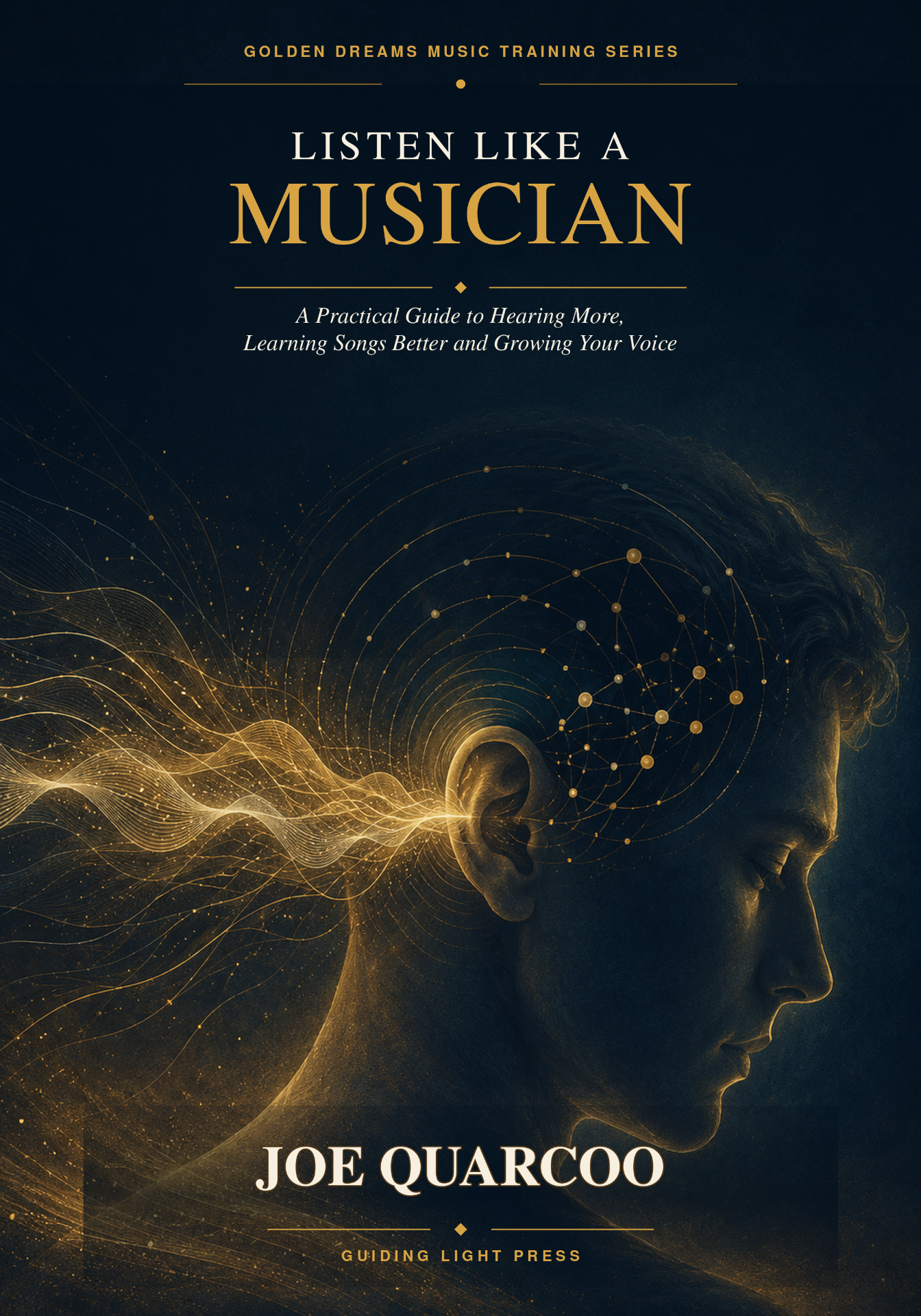
Listen Like a Musician
A Practical Guide to Hearing More, Learning Songs Better and Growing Your Voice
Joe Quarcoo
A practical, print-first companion for active listening, song learning, ear training and musical identity · Guiding Light Press · Forthcoming
Listen Like a Musician is a practical guide for singers, choir members, music leaders and developing musicians who want to hear more clearly, learn songs more effectively, hold their parts with confidence and grow into a more attentive musical identity.
You may be hearing more than you think
There is a moment in many singers’ lives when they realise that loving music and understanding what they hear are not the same thing.
A person may know hundreds of songs and sing every week, yet struggle to identify where a harmony enters, what changes in the second chorus or why a phrase feels difficult. That is not evidence that they are a false or hopeless musician. Listening like a musician is a skill—and skills can be developed.
Some people remember melody quickly but struggle to separate harmony. Others feel rhythm instinctively but cannot yet describe tone, structure or arrangement. These differences do not divide ‘real’ musicians from everybody else. They help us identify where training should begin.
You are not late. Your ear is not a lost cause. Let us listen again.
Hearing tells you music is playing. Listening asks what the music is doing.
A casual listener may enjoy the total experience. A musical listener can enjoy the song while also noticing its construction: message, lyrics, pulse, rhythm, melody, harmony, tone, dynamics, instruments, space and shape.
Critical listening is not a demand to turn every song into homework. It is a mode musicians can choose when they need to learn, prepare, teach, collaborate or perform.
What disciplined listening makes possible
- Learning songs more quickly
- Remembering parts more reliably
- Improving pitch awareness
- Following musical direction
- Diagnosing rehearsal problems
- Teaching with clearer language
- Making purposeful expressive choices
- Collaborating more effectively
- Redirecting attention away from performance fear and towards the song
The book does not promise perfect pitch or effortless hearing. It offers a structured, patient path for growth.
Ten things inside a song
A song may initially feel like one complete object, but many elements are working together. The Ten Listening Windows direct attention towards different parts of that whole.
What the Song Carries
Its emotional, communicative or spiritual centre.
Lyrics and Story
What is being said, repeated and developed.
Pulse and Tempo
The underlying beat and speed.
Rhythm and Groove
How sounds, words and instruments sit in time.
Melody
The main musical line and how it rises, falls, repeats or leaps.
Harmony
The supporting notes and vocal lines around the melody.
Dynamics and Vocal Choices
Changes in intensity, attack and expression.
Tone Colour
The qualities distinguishing a voice or instrument.
Instruments and Texture
The layers entering, leaving and interacting.
Form and Journey
How the song develops from beginning to end.
Give each hearing a purpose
Trying to hear everything at once can overwhelm the developing musician. The answer is not simply to listen harder. The Five-Pass Listening Method gives each hearing a clear purpose.
Pass One — Receive the whole song
Listen without stopping. Notice the overall message, emotional journey and structure.
Pass Two — Follow the words and rhythm
Read the lyrics where available, tap the pulse and notice breaths, pauses, repeated phrases and where syllables sit around the beat.
Pass Three — Follow the melody
Hum or sing the main melody. Notice where it rises, falls, repeats, changes or becomes difficult.
Pass Four — Find the other voices
Choose one harmony line and follow it consistently rather than jumping between parts.
Pass Five — Study expression and arrangement
Notice dynamics, tone, vocal effects, instrumental entries, transitions, space and the ending. Ask how the choices serve the song.
The five passes do not always need to happen in one sitting. Repetition is not failure. It allows the song to become familiar enough for deeper information to emerge.
Musical birth
Joe uses the expression ‘musical birth’ to describe the gradual point at which an emerging musician begins to sing with developed skill, greater independence and a recognisable identity.
Musical birth is rarely one dramatic moment. Potential is exposed to disciplined listening; listening shapes practice; practice is tested within a real musical community; feedback corrects weakness; and repeated expression allows an identifiable voice to emerge.
Exposure
Potential meets music through listening and encounter.
Active listening
Attention is trained on what the music is doing.
Modelling
The musician studies singers, players and traditions worth learning from.
Private practice
What is heard is repeated, isolated and refined.
Group expression
Skills are tested within a real musical community.
Feedback
Correction exposes weakness and redirects growth.
Emerging identity
Repeated expression allows an identifiable voice to emerge.
Musical identity is not discovered by refusing influence. It is formed by digesting influence until the musician can choose responsibly.
‘Musical birth’ is Joe’s practical coaching concept. It is not presented as scientific or medical theory.
Twenty listening rooms. Five movements of formation.
The book moves through five movements, each building on the last—from awakening attention towards the formation of a disciplined, attentive musical identity.
Movement One
Awakening Attention
- The Ten Things Inside a Song
- The Five-Pass Listening Method
- Musical Birth — From Admiration to Identity
- Make Practice an Appointment
This movement trains attention and helps musicians move from receiving a song as one large object to noticing its internal activity.
Movement Two
Hearing the Building Blocks
- Pitch, Notes and the Ear You Can Train
- Finding Melody and Harmony Lines
- Rhythm, Words and the Shape of a Phrase
This movement introduces the foundational elements a musician needs to recognise and remember.
Movement Three
Learning the Song from Within
- Dynamics, Tone and Honest Expression
- Build a Song Map
- Keys, Scales and the Shape of Home
- Intervals — Hearing the Distance Between Notes
- Rhythm, Metre, Tempo and Groove
- Chords, Bass Movement and Harmonic Direction
This movement helps the reader understand how a song is constructed and navigate it independently.
Movement Four
Listening with Other People
- Choir Blend — One Sound Without Erasing People
- Holding Your Part While Hearing the Whole
- The Music Director as a Diagnostic Listener
- Instruments, Arrangement and Production
- Words, Meaning and Spiritual Listening
- Listening Under Pressure
- From Influence to Musical Identity
Listening becomes relational through ensemble work, leadership, production, spiritual interpretation and performance.
Movement Five
Formation: Becoming the Listener You Need
The final movement translates the book into structured practice, evidence of growth and repeatable habits.
One sound without erasing people
Ensemble listening is not merely about singing more quietly. Choir members must hear their own part, the voices around them, the main melody, the director and the complete musical intention.
Healthy blend does not require people to erase their voices or identities. It requires shared vowels, aligned rhythm, attentive balance, clear entrances and a willingness to adjust in service of the whole.
- Choir members. Holding your own part while remaining aware of the voices around you, the main melody, the director and the complete musical intention.
- Music directors. Diagnosing before correcting — identifying what is actually going wrong before demanding a different result.
- Instrumentalists and singers. Hearing arrangement cues, entrances and transitions so that parts meet the song at the right moment.
- Producers and collaborators. Listening to layers, space and texture rather than only to the loudest element in the mix.
- Worship teams. Attending to the words, their meaning and the spiritual responsibility of leading others through song.
The book does not present Joe as the only valid authority. It draws on shared principles of healthy ensemble culture and invites readers to weigh them within their own musical communities.
A book designed for practice
This is not a book to read once and place on a shelf. It is designed to be written in, listened with, revisited and used alongside real songs, rehearsals and musical-development goals.
Practical components inside the book
- A 21-day listening practice
- Twenty guided listening labs
- A 12-week listening-formation pathway
- A five-song listening portfolio
- Listening clinics
- A five-session listening journal
- A quick-reference glossary
- Coach’s Notes
- Song maps
- Melody and harmony exercises
- Rhythm, pulse and form activities
- Reflection and recording exercises
The book is designed to leave evidence of growth. Readers date entries, return to recordings, compare what they intended with what happened and identify what their attention is learning to notice.
Twenty-one days. One song. A different way of hearing.
The plan uses one principal song and approximately fifteen to twenty minutes on most days. It gradually moves the reader from receiving the whole song towards independent recall, interpretation and performance.
Days 1–3 · Receive and Remember
Listen to the whole song and let it become familiar.
Days 4–6 · Pulse, Rhythm and Words
Follow the beat, the phrasing and the lyric.
Days 7–9 · Main Melody
Hum or sing the principal line and notice its shape.
Days 10–12 · Harmony
Choose one supporting line and follow it consistently.
Days 13–15 · Expression and Arrangement
Attend to dynamics, tone, instruments and space.
Days 16–18 · Integration
Bring the parts back together into a single hearing.
Days 19–21 · Ownership
Move towards independent recall, interpretation and performance.
The pathway provides structure for growth. It does not promise that every listening or musical difficulty will disappear within twenty-one days.
Listen safely
Listening and practice should take place at safe volume levels. Anyone experiencing ringing, pain, muffled hearing, persistent hearing changes or concerning vocal symptoms should reduce exposure and seek appropriate professional advice.
This book provides general educational guidance. It is not medical, therapeutic, speech-and-language or audiological advice.
Who this book is for
Listen Like a Musician welcomes people at different stages of musical development. It does not require notation, expensive equipment or a music degree.
- 01Singers who love music but struggle to explain what they hear
- 02Choir members learning harmony parts
- 03Worship leaders and church music teams
- 04Developing musicians without formal training
- 05Recording artists learning songs and arrangements
- 06Choir directors and music leaders diagnosing rehearsal challenges
- 07Vocal coaches and facilitators
- 08Instrumentalists seeking ensemble awareness
- 09Producers and creative collaborators listening to layers
- 10Musicians rebuilding confidence after criticism or disappointment
- 11Schools, churches and community music groups
- 12Anyone moving from passive hearing to disciplined attention
About Joe Quarcoo

Joe Quarcoo is a Reverend, author, recording artist, choir director and vocal coach whose wider work spans research, programme design, community development and creative practice.
For close to three decades, he has been involved in singing, performance, choir direction and the development of vocalists and church music teams. Musicians who passed through choirs and musical crews he led have gone on to become music directors and practising musicians in different parts of the world.
His academic background in psychology informs his interest in the connection between listening, confidence, self-perception and musical growth. His coaching helps singers hear both the music and themselves with greater accuracy, courage and grace.
Joe Quarcoo is the public and professional name of Rev. Joseph Dennis Nii Noi Quarcoo.
Part of the Golden Dreams Music Training Series
Golden Dreams began as a music school and coaching platform serving individuals, groups and churches. The Golden Dreams Music Training Series carries that practical legacy forward through books, guided exercises, workshops and development pathways.
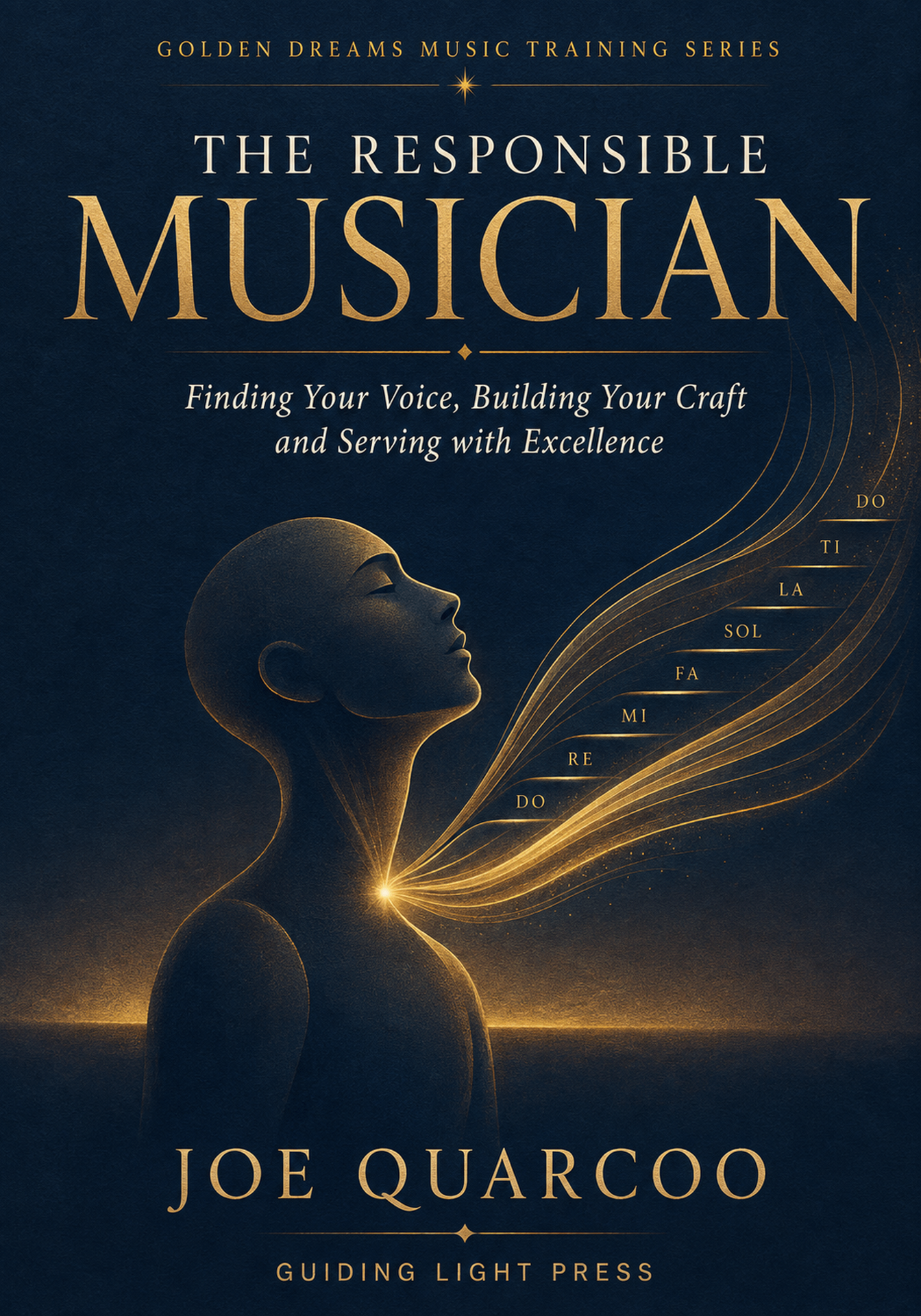
Companion title in the series
The Responsible Musician
Finding Your Voice, Building Your Craft and Serving with Excellence
A forthcoming companion title exploring vocal self-image, musicianship, healthy practice, performance and responsible music leadership.
Learn to listen together
Alongside the book, Joe welcomes invitations to work with singers, choirs, worship teams and music leaders. Programmes are available online or in person, as one-off sessions or longer development pathways.
- Listening and harmony workshops
- Choir-development sessions
- Vocal coaching
- Song-learning and arrangement clinics
- Worship-team development
- Music-director and choir-leader training
- Performance and song-delivery sessions
- Bespoke programmes for churches, schools and community groups
Listen again, and keep growing
Listen Like a Musician is currently in production. Joe welcomes conversations with singers, choir directors, worship leaders, churches, schools, community music groups, vocal coaches and partners interested in the book, coaching or workshops.